
june 2026
Newsletter.
Welcome to our newsletter, with all our updates and some helpful resources for you. In this edition we talk about the menopause and back pain.
Remember, we are here to help you and you can contact us anytime.
Welcome to our
June newsletter
Hello Ocean therapy friends
Hello from us, how do we find ourselves mid-June? Apologies for the lack of content in the last couple of months we have been busy behind the scenes with organising our new on-line clinic software. However, we are now excited to share some good news with you this month — we’ve introduced a new online booking system called Jane to make booking and managing your appointments easier than ever.
We know life can be busy, so we wanted to offer a simpler way for patients to book themselves in, view available appointments, and manage visits at a time that works for them. Jane is designed especially for health clinics and gives patients secure online access to appointments, reminders, and account details through its patient portal.
Jane is a secure booking system designed for health and wellness clinics. It allows patients to book appointments online, see available times in real time, manage upcoming visits, receive reminders, and access their patient portal, called. We know that life can be busy, and sometimes it’s much easier to book an appointment in the evening, early in the morning, or whenever you happen to have a spare moment. With Jane, you’ll be able to book yourself in online at a time that suits you, without needing to wait for clinic opening hours.
How booking with Jane works
When patients use Jane, they can choose the type of appointment they need, view available times on the calendar, and confirm their booking in just a few clicks. Once an account has been set up, patients can log back in to view and manage upcoming appointments through their secure My Account area.
Simple step-by-step guide to book yourself in
Step 1: Click on our online booking link:
Step 2: Choose the treatment or appointment type you would like to book.
Step 3: If needed, select the practitioner you would like to see. Click on the image/ photograph of your practitioner -Boris or Samantha.
Step 4: Browse the available dates and times shown on the calendar.
Step 5: Click on the appointment time that suits you best.
Step 6: Follow the prompts to confirm your booking.
Step 7: If you are using Jane for the first time, you may be asked to set up your account with a username and password so you can log in again in future. Jane patients use this login to access My Account, where they can manage appointments and other details.
What you can do through your Jane account
Once your account is set up, Jane gives you a simple place to keep track of your appointments. Depending on clinic settings, patients may be able to view upcoming appointments, reschedule or cancel appointments, complete intake forms, receive reminders, and access receipts or payment information through My Account.
We’re still here if you’d rather book with us directly
If you’d prefer to speak to us, or if you would like any help using the new system, please don’t worry — we are always happy to help.
Ocean Therapy Egdon Hall, Lynch Lane Weymouth DT4 9DN Tel: 01305 831726 Email: oceantherapy@icloud.com
Thank you, as always, for your continued support. We’re so pleased to be able to offer this new way of booking, and we hope it makes arranging your care with us even easier.
We look forward to welcoming you to the clinic soon.
What Jane looks like
Here is an example of Jane’s official branding and platform style, so you know what to look out for when booking online:
This will be supported by our own teal coloured ‘Ocean Therapy’ branding for easier identification.

Patient Spotlight!
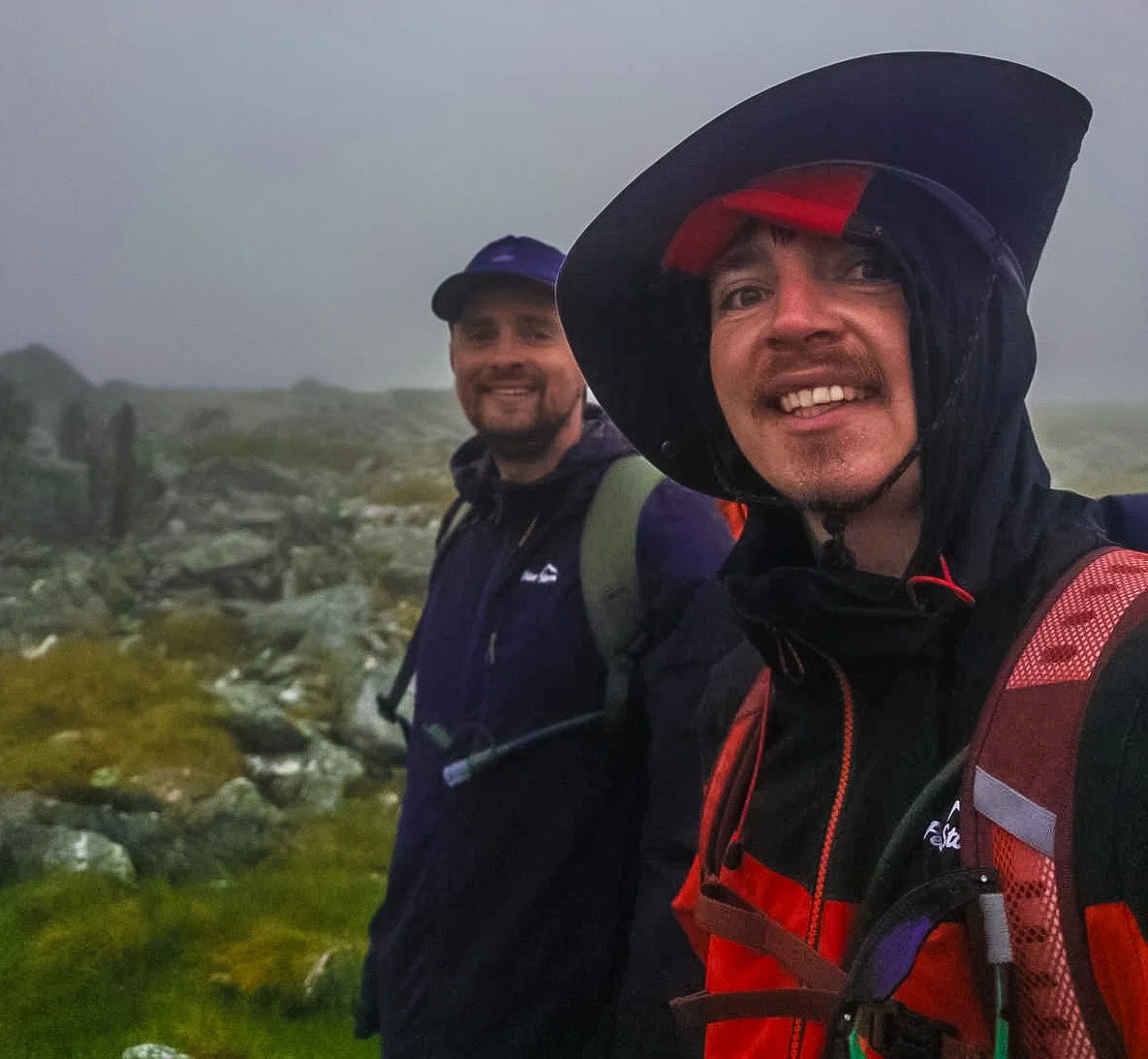
This is where we celebrate the achievements of our patients. Here Patrick Collide gives us his account of his most recent hiking challenge all in aid of the local Cancer charity ‘Fortunes well’ cancer trust …we applaud you Patrick and Tom…. Just amazing!!!......
Snowdonia Ten Peaks Challenge
Snowdonia, known as Eryri in Welsh, is a national park covering 823 square miles, with nine mountain ranges and 1,497 miles of routes to explore. At its heart stands Snowdon (Yr Wyddfa), the highest peak at 1,085 metres, and a well-known part of both the National and Welsh Three Peaks challenges. It was the ideal setting for a team of 50 outdoor enthusiasts, myself included, to attempt ten peaks in Snowdonia in a single day.
Our 50km route included steep paths, rocky scrambles, and exposed cliff edges, all tackled in whatever conditions the mountains chose to deliver. In order, the ten peaks were:
· Snowdon (1,085 m)
· Garnedd Ugain (1,064 m)
· Glyder Fach (997 m)
· Glyder Fawr (1,001 m)
· Pen yr Ole Wen (978 m)
· Carnedd Dafydd (1,044 m)
· Carnedd Llewellyn (1,064 m)
· Foel Grach (976 m)
· Carnedd Gwenllian (926 m)
· Foel-Fras (942 m)
The goal was to complete the hike in around 18 hours, starting at 6 am and finishing before midnight. To do that, we had to maintain a steady pace, keep breaks at each summit to a minimum, and try to keep a group of 50 people with varying abilities moving together.
Whenever gaps began to open, people had to make a conscious effort to close them. Often, that meant running over uneven ground just to keep up with hikers who were already moving faster than you.
Of the 50 people who started, 29 completed the route, with final hikers reaching the finish by 10:20 pm. Given the conditions, this was an exceptional achievement.
Gale-force winds drove rain sideways, leaving us drenched within minutes. Visibility dropped to almost nothing, making it difficult to keep track of the people ahead and behind. Reaching lower ground felt like a relief, but even the final descent was shrouded in fog, with visibility only improving at around 100 metres altitude.
For many hikers, the experience became a test of pure determination. By the end, it was less about comfort and more about finishing, no matter how much their joints and muscles ached.
All of this may make you wonder why the challenge was planned in the first place. There were two reasons: the thrill of pushing for a new sense of achievement, and, more importantly, raising money for Fortuneswell Cancer Trust. With one participant’s mother receiving care from the charity and another facing cancer themselves, we accepted the aches and exhaustion that would follow. What mattered was completing the challenge and honouring the belief of everyone who donated. We are proud to say we exceeded our £5,000 target and left Snowdonia with our heads held high and ice packs on our knees. Finishing the challenge was an honour, but an even greater one was seeing how a “fun” group outing could remind people in need that they matter and that others care about them.

The Menopause!
This month we are featuring the Peri-Menopause , Menopause and low back pain , …. having experienced symptoms of both of these first hand, I am personally invested and are here to help plus we have attached some interesting patient resources below. i hope you will find them informative and useful.
It has been a while since we covered any information on the menopause, and as we see so many lovely female patients suffering with the nasty diverse collection of symptoms of the peri and menopause, we thought we would highlight this in our June newsletter.
It’s a time of life no woman looks forward to. Not only does the menopause signal the loss of fertility – an emotional challenge for many women in itself - but the drop in hormones such as oestrogen and progesterone can cause a number of other physical changes as well. Most people will be aware that women can experience hot flushes and mood swings at this time, but the symptoms of the menopause are far more varied – and sometimes far more unpleasant – than just this. Weight gain, loss of strength, a leaky or weakened bladder and even osteoporosis are all possible results of the changing hormone levels.
But while the menopause might be inevitable (for 50% of the population at least), that doesn’t mean the negative symptoms have to be. With a little understanding of the changes occurring, and a few small lifestyle changes, women can minimise the negative symptoms of the menopause – and even thrive through this difficult time.
This blog will explore the changes that occur and give some practical advice for steps to alleviate the menopause’s unwelcome side-effects. For more detailed patient resources please see the attached leaflets…..more information available through Samantha on request.
What Did Oestrogen Ever Do for Me?
Although a number of other hormone levels start to drop during the menopause (notably progesterone and testosterone), the biggest dip occurs with a woman’s oestrogen levels. Most people are aware of oestrogen as the female sex hormone that is responsible for the menstrual cycle and plays an important role in pregnancy. However, it may come as a surprise to learn that oestrogen performs a number of other key roles in the body as well. So, what are these other roles that oestrogen plays, and how does the body start to change when it is gone?
Weight Management
Oestrogen helps your body to process and regulate glucose levels. As production of oestrogen slows, so the body’s ability to deal with sugars in the same way declines, and many women find that they start to put on weight during the menopause.
This might also be due to another of oestrogen’s key roles, which is to help maintain lean muscle mass. Essentially, the higher ratio of muscle to fat a body has, the more effectively it burns calories (muscle burns 3x more calories than fat). Therefore, if muscle levels decline the body loses its ability to burn calories as quickly, and weight gain can result.
Bone Health
Oestrogen isn’t just important for the muscles; it has a role to play in bone strength as well. In young women’s bodies, oestrogen helps create new bone mass, but as levels drop this ‘osteogenesis’ stops happening. The result can be weakened bones, with some women going on to develop osteoporosis following the menopause.
Pelvic Heath
As mentioned above, oestrogen has a role to play in maintaining muscle mass. For many women, the lack of oestrogen is felt most acutely during the menopause in the pelvic floor area, which can become weaker. In some cases, this can result a prolapse caused by one of the pelvic organs pressing against the pelvic floor. What’s more, the changes in this area can also result in a weakened or even leaky bladder (it doesn’t help that oestrogen also plays a role in urinary tract function).
Skin
One of the more unwelcome symptoms of the menopause is dryness and itchiness around the genital area. The drop in oestrogen causes the skin to become dryer and thinner, which can also make sex difficult and cause irritation. Following the menopause, this area can also become more acidic, which makes it more prone to infections.
Combating the Symptoms of the Menopause
The above might all sound a little depressing, but there’s good news too. We think a little knowledge is a good thing, and by understanding the reasons behind the changes that are taking place, you can be empowered to do something about them. Here are some of the steps that we’d recommend taking to alleviate the negative effects of the menopause.
Kegel Exercises
So easy you can do them in a supermarket queue, these are a must for women going through the menopause, as they specifically target the pelvic floor area. Regular pelvic exercises can help improve bladder control and prevent uncomfortable prolapses occurring, as well as strengthening your core to help avoid lower back pain.
Other Exercises
It goes without saying that the multiple benefits of exercise – better strength and stamina, improved mood and better sleep to name just a few– are particularly welcome for women going through the menopause. Try to make exercise a regular part of your routine during the menopause and the chances are you’ll experience milder symptoms than would otherwise have been the case. Download our free resource pack for some ideas on the best ways to exercise during the menopause.
Diet
As your body experiences the changes of the menopause, it can be worthwhile becoming more conscious of what you eat to help combat the symptoms outlined above. Avoiding the treat drawer is a good idea, as your body becomes less able to process sugars effectively. Eating foods high in Omega 3 and Vitamin D such as fatty fish can help improve bone strength, while high protein foods can help maintain lean muscle mass.
Self-Care
Now, more than ever, it’s important to take some time to focus on you. This might mean anything from running a warm bath, to revisiting a yoga or meditation practice, to booking a regular, relaxing massage. If sleep is an issue, take some time to develop a sleep routine that involves reducing screen time and starting to wind down an hour before bed. For some women, counselling is an important part of dealing with the menopause, as talking about the many emotions that can come up during this time can help put things into perspective. In short, whatever you feel you need, don’t be afraid to do it – this is a time to put yourself first!
In Summary
The menopause is perhaps second only to pregnancy in terms of the changes that take place within a woman’s body. It is only natural to find this an emotional and challenging time, though it is important to remember that like so much else, this is just a phase, and it will pass. By taking time to understand the changes, and make small tweaks to accommodate them, many women can have a positive experience of the menopause. Indeed, some women even find this a time of empowerment and self-discovery (see Suzanne Sommers’ book ‘The Sexy Years’ for inspiration on a positive menopause experience).
resources to download
Don’t forget! we are selling our gift vouchers in the reception, call in to reception on: 01305 831726 for more information.

As always if you require any further advice or have any questions relating to this or any other injury’s or conditions, we are always available for a no obligation chat just call our receptionists on : 01305 831726 to arrange.
Warmest wishes, Samantha & Boris
🌅 Stay Connected 🌅
Follow us on social media for monthly movement tips, clinic updates, and inspiration from our amazing Weymouth community.
📍 OceanTherapy Soft Tissue Injury Clinic, Weymouth, Dorset 📞 01305 831726

Disclaimer: This content is designed for information and education purposes only and is not intended as medical advice. Always consult with a qualified healthcare provider before beginning any exercise program, especially if you have existing medical conditions or concerns.