

JANUARY 2026 Newsletter.
Welcome to our newsletter, with all our updates and some helpful resources for you. In this edition we talk about Upper Crossed Syndrome .
Remember, we are here to help you and you can contact us anytime.
Welcome to our
JANUARY newsletter
Hello Ocean therapy friends!!
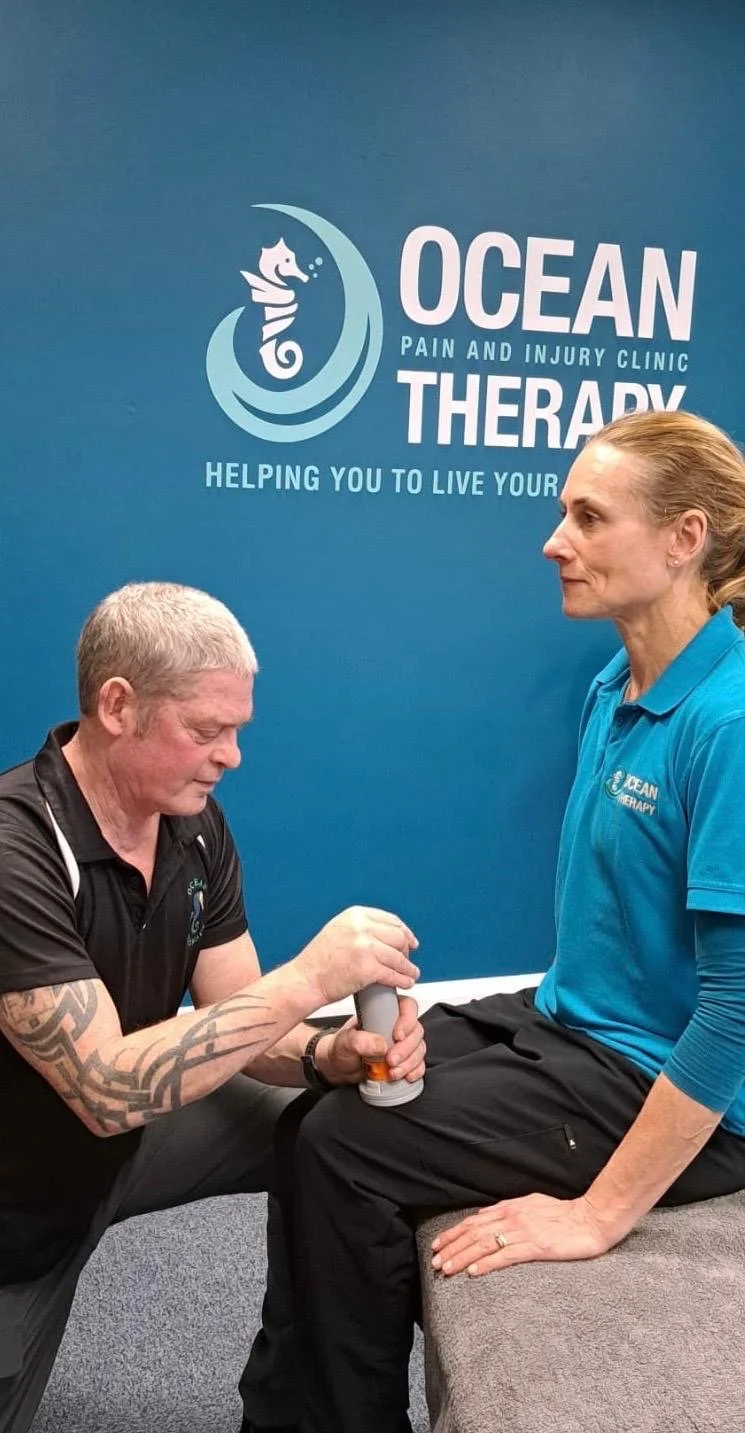
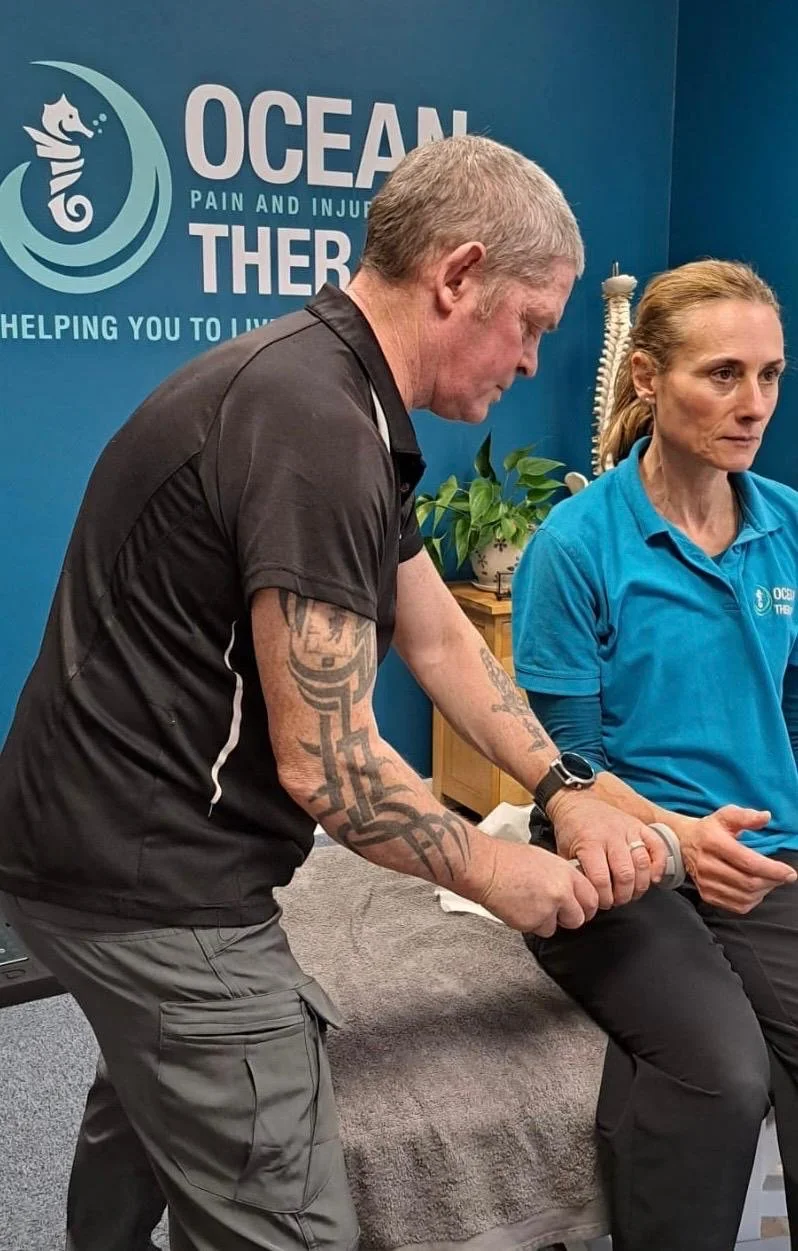
Happy New Year from everyone at Ocean Therapy 🎉 We do hope that you have all had a good peaceful Christmas break and ready for the new year ahead….for your information it’s the year of the Horse! Horses are energetic, free spirits who need space to express themselves, the high spirited nature of horses also points to a year ahead of social activity, group travel, and joint projects at work. Rather than it being a year to cocoon, predictions are it could be a year to embrace change and look for new opportunities. This leads me nicely onto our new venture here at Ocean Therapy… We are excited to kick off January by introducing the latest addition to our clinic — the VALD Dynamo Plus, & ForceDecks. This cutting-edge assessment technology allows us to take your rehabilitation, performance, and injury prevention to the next level - See below for more information!
Here’s to a strong, healthy start to the year!
To continue our theme with postural imbalances after December’s ‘Upper crossed syndrome’, this month we look at ‘Understanding Lower Crossed syndromes’
We have also added some interesting patient information sheets for your attention featuring skiing and how to stay safe and injury free during your annual ski holiday!
Hope you enjoy reading the content this month and we look forward to seeing you throughout the rest of this month.
Warm regards
Samantha & Boris
Warm regards,
Ocean Therapy
NEW AT OCEAN THERAPY
NEW AT OCEAN THERAPY
What is the VALD system?
The VALD Dynamo Plus & ForceDecks are advanced, objective testing tools used by elite sports teams, physiotherapists, and rehabilitation clinics worldwide. Together, they allow us to accurately measure muscle strength, detect imbalances, and assess how well your body produces and controls force during movement.
Why is this important for you?
Many injuries — and recurring pain — are caused by hidden muscular imbalances, poor load tolerance, or inefficient movement patterns that are difficult to identify with observation alone. This technology enables us to pinpoint exactly where your body needs support.
How ForceDecks analyse your movement
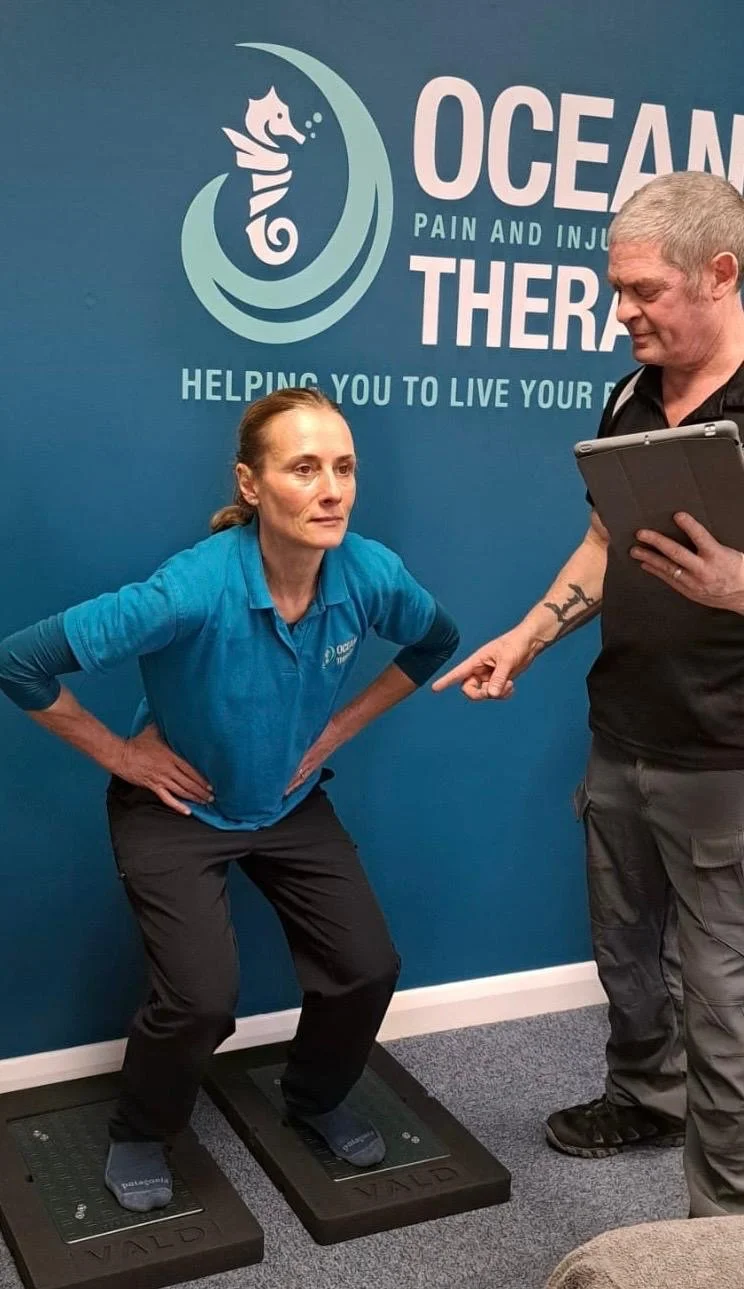
ForceDecks are dual force plates that measure how your body interacts with the ground. This gives us valuable insight into how you move, load, and balance — information that can’t be seen with the naked eye.
Squat Analysis - When you perform a squat on the ForceDecks, we can assess:
• How evenly you load each leg
• Whether one side is compensating for weakness or pain
• How efficiently you produce force during the movement
• Asymmetries that may increase injury risk or limit performance
This allows us to identify strength deficits, poor movement strategies, or confidence issues during functional tasks like squatting — a key movement for sport and daily activities.
Single-Leg Balance & Control During one-leg balance and stability testing, ForceDecks measure:
• Weight distribution and sway
• Your ability to control force through the foot and leg
• Differences between your left and right sides
• Balance strategies that may contribute to ankle, knee, hip, or lower back issues
This is particularly valuable for ankle injuries, ACL rehabilitation, post-surgical rehab, and return-to-sport decision-making.
Key benefits of this technology at Ocean Therapy:
✔ Accurate identification of muscular imbalances
We can precisely measure side-to-side differences and movement compensations.
✔ Personalised, data-driven corrective exercise plans
Your rehab program is built using real data, ensuring exercises target exactly what you need.
✔ Improved movement efficiency and confidence
By addressing the root cause of dysfunction, we help restore strong, controlled movement patterns.
✔ Safer return to sport and daily activities
Objective testing allows us to track readiness and reduce the risk of re-injury.
✔ Clear, measurable progress
Repeat testing shows tangible improvements over time, keeping you motivated and informed.
Who can benefit?
• Sports injuries and return-to-play programs
• Post-surgical rehabilitation
• Chronic pain or recurring injuries
• Strength and conditioning support
• Anyone wanting to move better, feel stronger, and stay active
We’re passionate about combining expert clinical care with world-class technology to help you get back to doing what you love — safely and confidently.
Boris will be adding this new technology to his ongoing functional movement Assessments, helping pinpoint your imbalances and getting you back stronger to your sport or activities of daily living.
Book an assessment with Boris, contact the clinic today on 01305 831726.
Friends of Ocean Therapy, I am using this opportunity to reach out to you all and request that if any of you know someone who is having their hip replaced that you share this information on my 'New Hip New You’ A comprehensive holistic hip replacement program providing emotional and physical support when it is most needed.
As you may well know I had my own hip replaced 1 year ago and have combined this expierence alongside my sports therapy expertise and knowledge to guide the patient through their own personal hip replacement journey.
The course is virtual for anyone living outside of the local area however a hybrid version is available for those in the Weymouth area.
Thank you, please share the word…
Understanding Upper Crossed Syndrome: The Upper Body's Postural Challenge
A Companion to Our Lower Crossed Syndrome Article last month.
What is Upper Crossed Syndrome?
Upper Crossed Syndrome (UCS), also referred to as proximal or shoulder girdle crossed syndrome, is one of the most common postural dysfunctions affecting the modern population. First described by Czech physician and physiotherapist Vladimir Janda, this condition creates a distinctive pattern of muscle imbalances in the upper body that can significantly impact your quality of life, work performance, and overall wellbeing.
The name "crossed syndrome" comes from the characteristic 'X' pattern created by the muscle imbalances when viewed from the side. In Upper Crossed Syndrome, specific muscles become tight and overactive whilst others become weak and underactive, creating a crossing pattern of dysfunction.
The Muscle Imbalance Pattern
In Upper Crossed Syndrome, we see a predictable pattern of muscle dysfunction:
Tight and Overactive Muscles:
• Upper trapezius - creates elevated, hunched shoulders
• Levator scapulae - pulls the shoulder blades upward
• Pectoralis major and minor - rounds the shoulders forward
• Suboccipital muscles - extends the upper neck
Weak and Underactive Muscles:
• Deep cervical flexors - the stabilising muscles of the front neck
• Middle and lower trapezius - responsible for scapular retraction
• Serratus anterior - controls scapular position and movement
• Rhomboids - pull the shoulder blades together
This imbalance creates joint dysfunction, particularly at the atlanto-occipital joint (where the skull meets the neck), C4-C5 cervical segment, cervicothoracic junction, glenohumeral (shoulder) joint, and T4-T5 thoracic segment.
Recognising the Signs: Clinical Presentation
Individuals with Upper Crossed Syndrome typically display several characteristic postural changes:
Postural Deviations:
• Forward head posture (FHP) - the head protrudes forward of the shoulders
• Increased cervical lordosis (excessive neck curve)
• Increased thoracic kyphosis (rounded upper back)
• Elevated and protracted (forward) shoulders
• Rotation, abduction, and winging of the shoulder blades
• Decreased glenohumeral stability
Common Symptoms:
• Neck pain and stiffness
• Shoulder pain and discomfort
• Headaches, particularly cervicogenic headaches
• Upper back pain between the shoulder blades
• Reduced cervical and thoracic mobility
• Jaw pain or temporomandibular joint (TMJ) dysfunction
• Fatigue in the neck and shoulder muscles
• Numbness or tingling in the upper arms
These postural changes aren't merely cosmetic - they decrease shoulder stability, alter breathing patterns, and can lead to secondary complications if left untreated.
What Causes Upper Crossed Syndrome?
Upper Crossed Syndrome rarely develops overnight. It's typically the result of prolonged exposure to poor postural habits and modern lifestyle factors:
Primary Contributing Factors:
1. Prolonged Sitting and Computer Work
• Extended periods at desks with poor ergonomics
• Looking down at computer screens or mobile devices
• Lack of movement breaks throughout the day
2. Occupational Demands
• IT professionals (67% prevalence rate)
• Office workers and students (37.1% prevalence)
• Healthcare workers, dentists, and beauticians
• Anyone in occupations requiring prolonged forward head positions
3. Sedentary Lifestyle
• Lack of regular physical activity
• Insufficient strengthening of postural muscles
• Poor core stability and trunk control
4. Poor Ergonomics
• Improperly positioned workstations
• Incorrect monitor height
• Inadequate chair support
• Poor sleeping positions
5. Repetitive Movement Patterns
• Sports or activities emphasising forward shoulder positions
• Chest-dominant exercise programmes
• Neglecting posterior chain strengthening
The Progression: From Dysfunction to Pain
According to Karel Lewit, muscle imbalance typically occurs before functional dysfunction develops. Understanding this progression is crucial for early intervention:
Stage 1: Muscle Imbalance
• Some muscles become inhibited and weak
• Others become shortened and stiff
• No pain present initially
Stage 2: Altered Movement Patterns
• Body compensates for muscle imbalances
• Inappropriate movement patterns develop
• Joint stress increases
Stage 3: Tissue Changes
• Sustained poor posture causes adaptive tissue changes
• Fascial restrictions develop
• Trigger points form in overactive muscles
Stage 4: Pain and Inflammation
• Joint dysfunction becomes apparent
• Pain develops as a symptom
• Inflammatory responses triggered
• Risk of secondary complications increases
Secondary Complications
If left untreated, Upper Crossed Syndrome can lead to several secondary conditions:
• Impingement syndrome
• Rotator cuff pathology
• Cervicogenic headaches
• Shoulder instability
• Poor proprioception (body position awareness)
• Decreased respiratory capacity
• Chronic myofascial pain syndrome
• TMJ disorders
• Nerve impingement syndromes
Assessment and Diagnosis
At Ocean Therapy, we employ a comprehensive assessment approach to identify Upper Crossed Syndrome:
Treatment Approach: The Ocean Therapy Method
At Ocean Therapy, we utilise a multimodal, evidence-based approach to treating Upper Crossed Syndrome, combining several therapeutic modalities:
1. Manual Therapy Techniques
Myofascial Release
• Sustained pressure applied to restricted fascia
• Relieves pain and restores movement
• Targets tight pectorals, upper trapezius, and levator scapulae
Muscle Energy Technique (MET)
• Active muscle contractions against resistance
• Increases flexibility of tight muscles
• Stimulates proprioceptors for improved movement control
Soft Tissue Mobilisation
• Advanced bodywork techniques
• Addresses trigger points and muscle adhesions
• Improves tissue quality and reduces pain
Joint Mobilisation
• Restores normal joint mechanics
• Particularly beneficial for cervical and thoracic spine
• Reduces pain and improves mobility
2. Clinical Acupuncture and Cupping
Key Exercise Categories:
Strengthening Exercises:
• Deep cervical flexor strengthening (chin tucks)
• Middle and lower trapezius activation
• Serratus anterior exercises
• Rhomboid strengthening
• Scapular stabilisation exercises
Stretching and Lengthening:
• Pectoralis major and minor stretches
• Upper trapezius stretches
• Levator scapulae stretches
• Suboccipital releases
• Doorway pec stretches
Postural Re-education:
• Proprioceptive training
• Movement pattern correction
• Ergonomic modifications
• Functional activity training
The Evidence: What Research Shows
Recent systematic reviews and meta-analyses have demonstrated strong evidence for physiotherapeutic interventions in Upper Crossed Syndrome:
Exercise Therapy Outcomes:
• Significant improvement in craniovertebral angle
• Reduction in thoracic kyphosis
• Decreased rounded shoulder posture
• Improved muscle activation patterns
• Enhanced movement quality
Manual Therapy Benefits:
• Significant pain reduction
• Improved functional outcomes
• Better range of motion
• Reduced disability scores
The research consistently shows that a combined approach of exercise therapy and manual techniques produces the best outcomes for long-term correction of Upper Crossed Syndrome.
Ergonomic Recommendations
Preventing and managing Upper Crossed Syndrome requires attention to your work and home environment:
Workstation Setup:
• Monitor at eye level, arm's length away
• Chair with proper lumbar support
• Feet flat on floor or footrest
• Forearms parallel to floor when typing
• Regular movement breaks every 30-45 minutes
Mobile Device Use:
• Hold phone at eye level
• Avoid prolonged downward gazing
• Use voice-to-text when possible
• Take frequent breaks
Sleeping Position:
• Avoid stomach sleeping
• Use supportive pillow that maintains neutral neck alignment
• Consider cervical support pillows
Prevention Strategies
The best treatment for Upper Crossed Syndrome is preventing it from developing:
1. Maintain Regular Physical Activity - Include exercises that strengthen the posterior chain
2. Practice Good Posture - Be mindful of head and shoulder position throughout the day
3. Take Movement Breaks - Stand, stretch, and move every 30-45 minutes
4. Balance Your Exercise Programme - Don't neglect upper back and posterior shoulder exercises
5. Optimise Your Ergonomics - Ensure your work and home environments support good posture
6. Address Issues Early - Don't wait for pain to develop before seeking help
The Ocean Therapy Difference
At Ocean Therapy, we understand that Upper Crossed Syndrome is not simply a structural problem requiring only stretches and strengthening. It's a functional issue involving the entire sensorimotor system - the integration of your nervous system, muscles, and skeletal structures.
Our comprehensive approach includes:
• Individual Assessment - Understanding your unique presentation and contributing factors
• Multimodal Treatment - Combining manual therapy, acupuncture, exercise, and education
• Progressive Programming - Systematically addressing muscle imbalances and movement dysfunctions
• Functional Integration - Ensuring improvements transfer to your daily activities
• Long-term Solutions - Empowering you with self-management strategies
When to Seek Help
Consider consulting with our team if you experience:
• Persistent neck or shoulder pain
• Frequent headaches, particularly at the base of the skull
• Difficulty maintaining good posture
• Visible postural changes (forward head, rounded shoulders)
• Reduced neck or shoulder mobility
• Symptoms affecting work performance or quality of life
Early intervention is key to preventing the progression of Upper Crossed Syndrome and avoiding secondary complications.
Take the Next Step
Upper Crossed Syndrome is highly treatable with the right approach. Don't let poor posture control your life or limit your activities. Whether you're experiencing symptoms or want to prevent problems from developing, Ocean Therapy is here to help.
Contact Ocean Therapy today to schedule your comprehensive assessment and begin your journey to better posture, reduced pain, and improved function.
Remember: Like Lower Crossed Syndrome affects the lower body and pelvis, Upper Crossed Syndrome impacts the upper body and neck. Together, they represent the two most common postural syndromes in modern society. Both are preventable and treatable with expert guidance and appropriate intervention.
how to stay safe and injury free during your annual ski holiday!

Don’t forget! we are selling our gift vouchers in the reception, call in to reception on: 01305 831726 for more information.

🌅 Stay Connected 🌅
Follow us on social media for monthly movement tips, clinic updates, and inspiration from our amazing Weymouth community.
📍 OceanTherapy Soft Tissue Injury Clinic, Weymouth, Dorset 📞 01305 831726
